Sun Protection on Holiday 2026: SPF, Kids, Sunburn and the UV Index in Greece
Greek summer sun is far stronger than back home - the UV index in July and August regularly tops 10. One sunburn can ruin half a holiday, and children's skin is especially vulnerable. A guide: how to actually protect yourself, which SPF and how often, protecting babies and kids, sunburn first aid and what to pack in your sun bag.
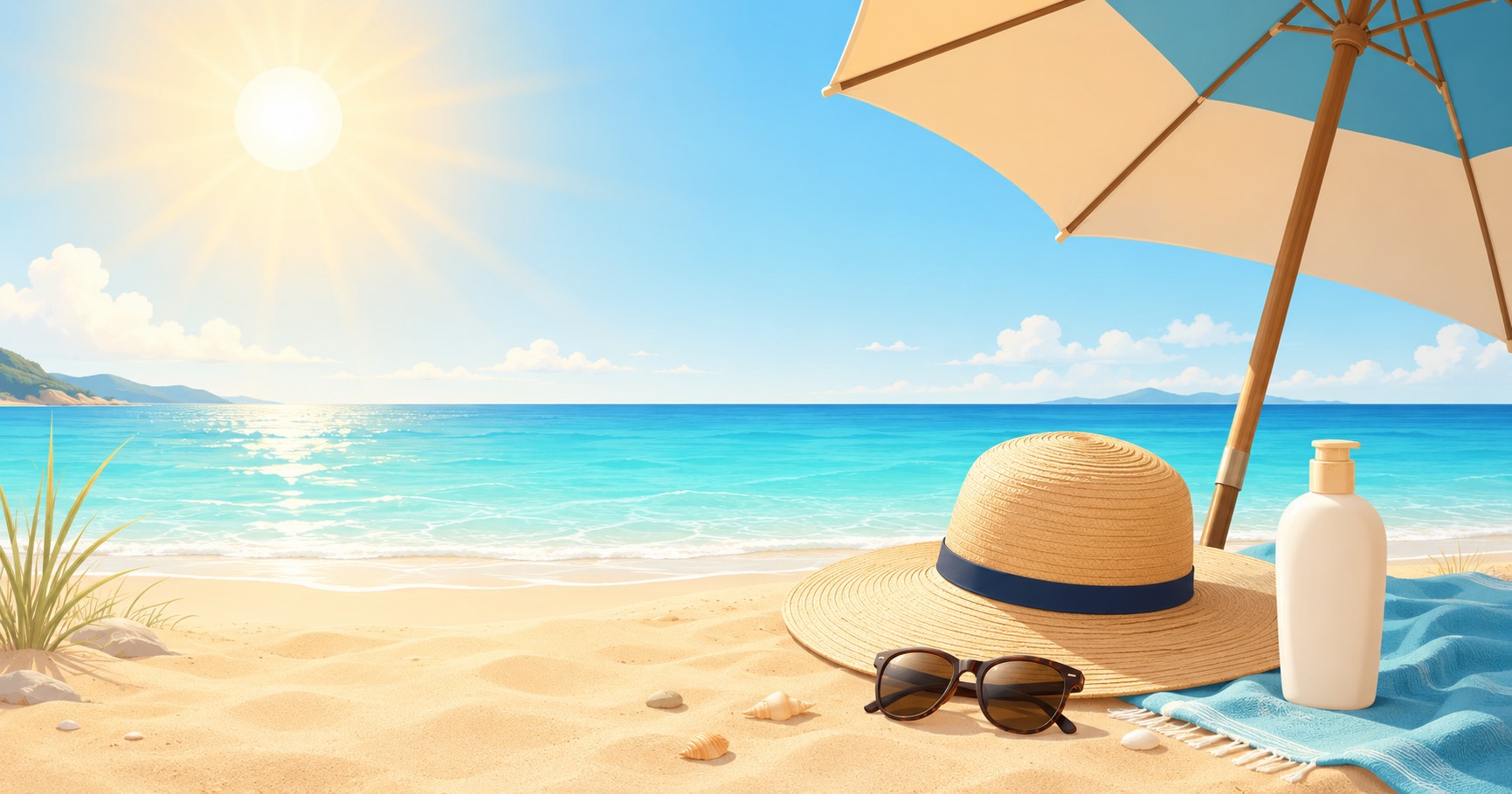
Greek summer sun is not the same as the sun back home. In July and August the UV index regularly tops 9–10, and the sea and sand reflect the rays, so you burn even when it feels pleasant. One sunburn can ruin half a holiday - and for small children it's dangerous. The good news: protection is simple once you know the rules. This guide covers which SPF and how often, how to protect babies and kids, what works beyond cream, sunburn first aid and a complete sun bag.
The UV index in Greece - how strong is the sun
The UV index shows the strength of solar radiation. Protection is needed from 6 (high) upward; a Greek summer is regularly very high to extreme:
| Month | Typical UV index (midday) | Level |
|---|---|---|
| June | 8–10 | very high |
| July | 9–11 | very high / extreme |
| August | 9–11 | very high / extreme |
| September | 6–8 | high |
⚠️ The most dangerous hours are 11 a.m. to 4 p.m. - when the sun is strongest. Use the Greek siesta: hit the beach before 11, return after 4, and stay in the shade or indoors in between. Month-by-month weather and heat in The best time to visit Greece.
SPF - which, how much and how often
- Factor: for a Greek summer use SPF 30 to 50+, labelled broad spectrum (UVA + UVB) and water-resistant.
- When: apply 15–20 minutes before going out, on dry skin.
- How much: most people apply too little. A full adult body needs about 30 ml (a small handful, "two tablespoons") - skimp on cream and you skimp on protection.
- How often: reapply every 2 hours, and always after swimming, sweating or towelling off - even water-resistant cream washes off.
- Don't forget ears, neck, feet, the scalp (parting), the backs of hands and lips (SPF lip balm).
💡 Expired or last-summer's opened cream loses protection - check the date and the "open X months" symbol. A new bottle beats false confidence.
Protecting babies and children
Children's skin is thinner and far more sensitive - childhood sunburn carries long-term risk. The rules are stricter:
- Babies under 6 months: no direct sun. Shade, light long-sleeved clothing, a hat; use cream only on small areas you can't cover, and on your paediatrician's advice.
- Children over 6 months: SPF 50+, applied often and generously; a UV shirt/swimsuit (rashguard), a wide-brim hat and sunglasses.
- Shade and rhythm: beach in the morning and late afternoon, shade midday. An umbrella's shade isn't full protection - sand and water reflect UV.
- Drinking water: children dehydrate fast in the heat - offer water often and watch for overheating (flushing, lethargy, headache, nausea).
What else to pack for kids (medicines, burn gel, thermometer) is in our Kids travel first aid kit.
Beyond cream - what really protects
- A wide-brim hat - protects the face, ears and neck (a peaked cap leaves ears and the back of the neck exposed).
- UV-protection sunglasses - the sun damages eyes too.
- UV (UPF) clothing and long-sleeve swimwear - the best protection for kids and sensitive skin.
- An umbrella or beach tent - shade all day; on sunbed prices and when your own is free, see Beach prices 2026.
- The rhythm of the day - avoid direct sun 11 a.m.–4 p.m. The strongest protection is simply not being in the sun at peak.
The sun bag - what to pack
| Item | Note |
|---|---|
| SPF 30–50+ (body) + SPF 50+ for kids | broad spectrum, water-resistant; bring enough |
| SPF lip balm | lips burn easily |
| Hat, sunglasses, UV shirt | for every family member |
| After-sun gel / aloe vera | cools and soothes skin in the evening |
| Drinking water | against dehydration and heatstroke |
| Umbrella / beach tent | your own shade = saving and protection |
💡 Bring cream from home. Greek pharmacies and supermarkets sell sun protection, but it's generally pricier than at home - especially kids' SPF 50+. Pack enough in advance and save.
Sunburn - first aid
If you burn despite everything, act at once:
- Get out of the sun and cool the skin with a lukewarm/cool shower or compresses.
- Hydrate - drink water; a burn pulls fluid from the body.
- Apply aloe vera / after-sun gel; avoid greasy creams and "home remedies" (butter, alcohol).
- For pain, ibuprofen helps (for children, by age and the leaflet).
- Don't pop blisters and cover the burn until it heals; keep out of the sun afterward.
⚠️ See a doctor if there are: blisters over a large area, fever, chills, severe headache, nausea or confusion (possible heatstroke), and especially for babies and young children. Greek tourist police (171) and the ambulance (166) operate in English too; pharmacies (φαρμακείο) run duty rotas.
FAQ
Which SPF for Greece?
SPF 30–50+ for the body, SPF 50+ for kids and the face, always broad spectrum and water-resistant. Apply 15–20 min before the sun and reapply every 2 hours and after swimming.
Does cream protect me all day?
No. Even water-resistant cream washes off with swimming and towelling, so reapplying every 2 hours (and after water) is essential. Shade, a hat and UV clothing matter just as much.
Can a baby be in the sun?
Babies under 6 months should be kept out of direct sun - shade, light clothing, a hat. For older children, SPF 50+, UV swimwear, a hat and avoiding the peak (11 a.m.–4 p.m.).
Can I buy sunscreen in Greece?
Yes, in pharmacies and supermarkets - but it's usually pricier than at home. It's smarter to bring enough from home, especially kids' SPF.
Conclusion
Sun protection in Greece isn't complicated - but it is essential. The right SPF applied generously and often, a hat and UV clothing, shade at peak and enough water mean a holiday without a single burn. Be especially strict with children: their skin remembers. Pack your sun bag before the trip and enjoy the Greek sun - safely.
Next: our kids travel first aid kit, the new beach law and airports and flights to Greece.