Athens in One Day (2026): Hour-by-Hour Itinerary - Acropolis, Plaka, Monastiraki and Sunset from Lycabettus
In short
Only one day in Athens - on your way to the islands or as a city break? This hour-by-hour plan covers all the essentials: the Acropolis at 8 am (€30, timed entry required), the Acropolis Museum, Plaka and Anafiotika, the Ancient Agora, the changing of the guard at Syntagma and sunset from Lycabettus hill - plus how to get from the airport and survive the summer heat. Athens often happens "in passing" - on the way to the islands, before a ferry from Piraeus or Rafina, or as a long weekend.
Athens often happens "in passing" - on the way to the islands, before a ferry from Piraeus or Rafina, or as a long weekend. The good news: Athens's greatest hits fit into one (full) day, because the historic centre is compact and entirely walkable. The bad news: without a plan you'll spend half of it in queues. Here is a proven hour-by-hour itinerary for 2026, with current prices and rules - from which Acropolis gate to use, to where the sunset is best.
⚠️ The key 2026 facts: an Acropolis ticket costs €30 year-round (the winter discount has been abolished) and entry is only possible with a pre-booked time slot on the official hhticket.gr. In peak season morning slots sell out days ahead - book as soon as you know your date. Free-entry days: 6 March, 18 April, 18 May, the last weekend of September and 28 October (expect crowds).
The hour-by-hour plan
07:45 - be at the Acropolis before opening
The Acropolis opens at 8:00 in summer, and the first slot is by far the best: fewest people, softest light for photos and bearable temperatures on the shade-free marble. Use the side (south-east) entrance by the Theatre of Dionysus - the queue is usually shorter than at the main west gate, and you pass the theatre where tragedy itself was born.
08:00–10:00 - the Acropolis: Parthenon, Erechtheion, Propylaea
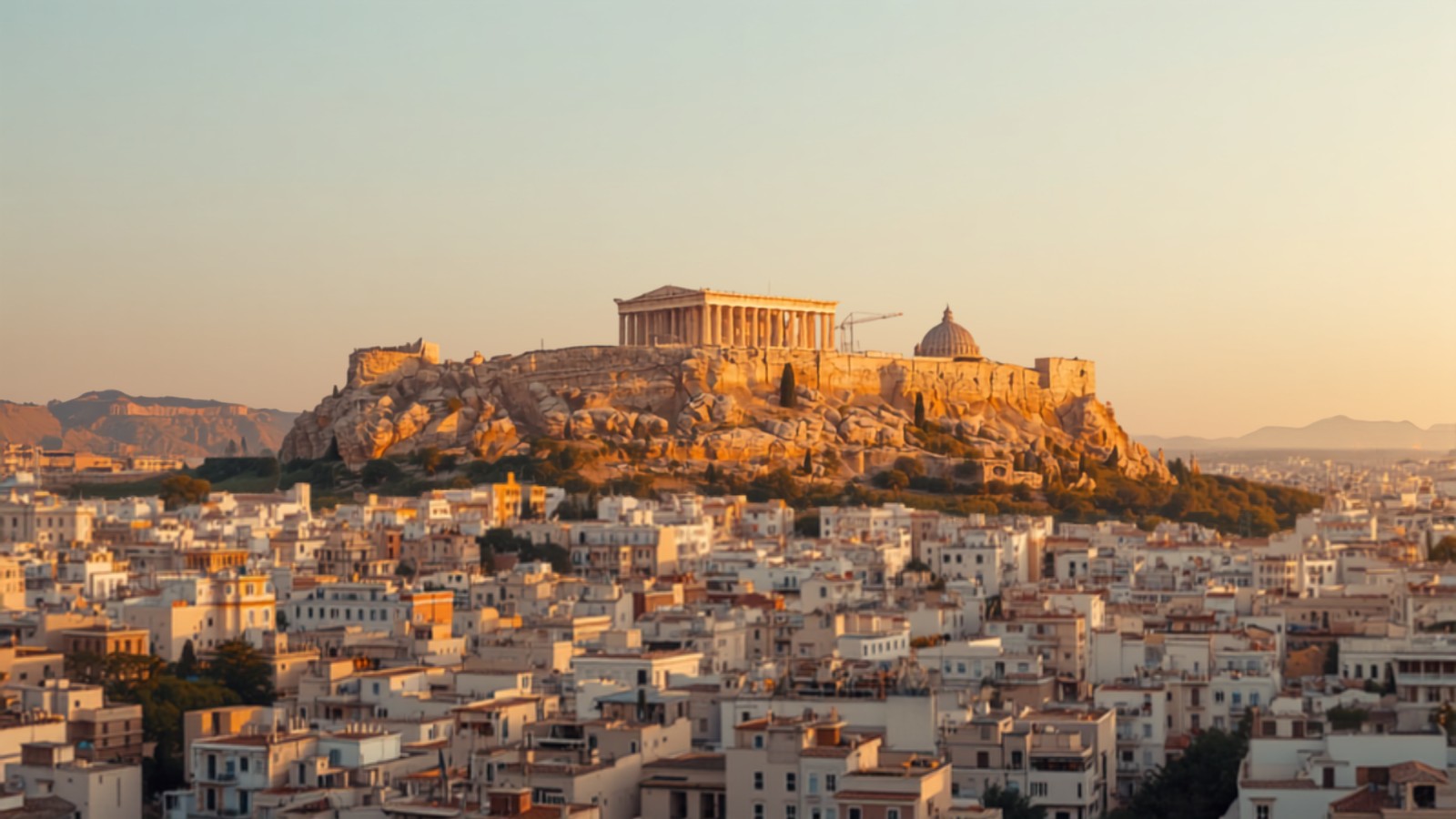
Climb past the Odeon of Herodes Atticus (a Roman amphitheatre still staging performances), through the monumental Propylaea, up to the Parthenon - the temple that has defined Western architecture for 2,500 years. Don't miss the Erechtheion with its Caryatids, and the rampart views all the way to Piraeus and the sea. Ninety minutes to two hours is enough.
10:00–11:30 - the Acropolis Museum
Three hundred metres from the exit, built over excavations you view through glass floors, stands one of Europe's finest museums: the original Caryatids, the Parthenon frieze and a straight view of the Acropolis itself. Tickets are also booked online (prices vary by season - check the museum's official site). Coffee on the museum terrace comes with the best Parthenon view in town.
11:30–13:00 - Plaka and Anafiotika
Wander down into Plaka, Athens's oldest quarter: neoclassical façades, bougainvillea, souvenir shops and tavernas. Be sure to climb the steps into Anafiotika - a miniature "Cycladic island" of whitewashed cottages clinging to the Acropolis's northern slope, built by 19th-century craftsmen from Anafi island. The most photogenic corner of the city, and most tourists walk right past it.
13:00–14:00 - lunch like an Athenian
For a quick, unbeatable lunch: souvlaki and gyros around Monastiraki (the legendary grill houses charge €4–6 a portion). For a sit-down meal, the alley tavernas of Psiri serve meze, fresh fish and moussaka for €10–15 per person. More on Greek food: Food in Greece - what to try.
14:00–15:30 - the Ancient Agora and Monastiraki
The Ancient Agora was the heart of public life in classical Athens - Socrates and Plato argued under these stoas. Today it offers the Temple of Hephaestus (the best-preserved Greek temple anywhere), the reconstructed Stoa of Attalos with its museum, and blissful shade under olive trees. Then browse the flea market and vintage shops of Monastiraki - the city's liveliest square, Acropolis view included.
15:30–16:30 - Syntagma: the changing of the guard and the National Garden
In front of Parliament on Syntagma Square, the Evzones in their traditional uniforms change guard every hour on the hour - a ceremony worth timing (the grand Sunday change is at 11:00). Right behind: the National Garden, a green oasis for a breather, and the Zappeion. Five minutes further is the Panathenaic Stadium (Kallimarmaro) - the marble stadium of the first modern Olympics in 1896.
17:00–18:30 - Ermou or Kolonaki: coffee and shopping
Ermou is the main shopping street (Syntagma towards Monastiraki), while Kolonaki is the elegant quarter of concept stores and specialty cafés. Recharge - the finale is coming.
18:30–20:30 - Lycabettus: sunset over Athens
From Kolonaki the funicular (teleferik) climbs to the top of Lycabettus (277 m) - the highest point of the centre. From up there: the whole city at your feet, the Acropolis in golden light, the sea out to Aegina. The funicular runs late into the evening (return ticket ~€10); the sporty walk up takes ~30 minutes. Alternatives closer to the centre: Areopagus rock or Filopappou hill - free, with a straight view of the illuminated Parthenon.
21:00 - dinner in Psiri
By night Psiri becomes the liveliest quarter in town: tavernas with live music, modern meze bars and rooftop terraces facing the floodlit Acropolis. The perfect end to the day.
Getting from the airport / port to the centre
| From | Option | Time · price |
|---|---|---|
| Airport (ATH) | Metro line 3 direct to Monastiraki/Syntagma | ~40 min · ~€10 |
| Airport (ATH) | X95 bus to Syntagma (runs 24/7) | ~60 min · ~€5.5 |
| Piraeus port | Metro line 1 to Monastiraki | ~25 min · ~€1.2 |
A city metro/bus ticket (90 min) costs about €1.20 - though the centre is easiest on foot: the Acropolis to Syntagma is a 15-minute walk.
Summer Athens survival tips (July–August)
- The heat is serious: the Acropolis is bare marble with no shade - that's why it goes first, at 8 am. During heatwaves the authorities have been known to close the Acropolis from 12:00 to 17:00 - one more reason for a morning slot.
- Water and a hat - non-negotiable; there are fountains near the entrances. More tips: Sun protection on holiday.
- Footwear: the Acropolis marble is polished slippery - trainers, not flip-flops.
- Pickpockets: metro line 3 and Monastiraki are their turf - backpack in front, phone in a front pocket.
- A swim? If you're staying longer, the "Athens Riviera" is half an hour away: Glyfada and Vouliagmeni have fully equipped city beaches.
Athens as a stopover to the islands
If Athens is your stopover, combine it: ferries to the Cyclades leave from Piraeus and Rafina (closer to the airport). The whole ferry system, prices and tricks: How to reach the Greek islands. For a bed before or after the ferry, look in Athens or Rafina.
FAQ
How much is the Acropolis ticket in 2026?
€30, year-round - the 50% winter discount has been abolished. Entry is only with a reserved time slot via hhticket.gr. A combined ticket also covers the Ancient Agora, Roman Agora, Hadrian's Library and Kerameikos - worth it if you're visiting several sites; check prices when booking.
Is one day enough for Athens?
For the greatest hits - yes: the Acropolis, the museum, Plaka, the Agora, Syntagma and Lycabettus all fit into one full day with this plan. With two days you add the National Archaeological Museum, Kerameikos and a swim on the Riviera.
When is the best time to visit Athens?
April–June and September–October: warm without the extreme heat. In July and August plan sights before 11:00 and after 18:00. More: The best time to visit Greece.
Is Athens safe?
For tourists - yes, with standard big-city awareness: pickpockets on the metro and around Monastiraki are the main (and practically only) concern in the centre.
Athens in one day is entirely doable - with an early Acropolis slot and this order of attack you'll see more than most visitors manage in three. And when you're ready for the sea, the beaches of Attica or an island ferry are right there.