Food in Greece - What You Must Try and Where to Eat
Greek cuisine is one of the great pleasures of a holiday - fresh ingredients, bold flavours and honest prices. Here's what to order.
Greek cuisine is not complicated or obscure - it is built on exceptional raw ingredients (olive oil, fresh fish, vegetables, lamb, legumes, cheese) treated simply and honestly. The Mediterranean diet is the template. Every meal is an occasion. Here is a practical guide to what to eat, what to avoid, and how to find genuinely good food rather than tourist-trap imitations.
The Essentials - Dishes You Cannot Miss
Gyros
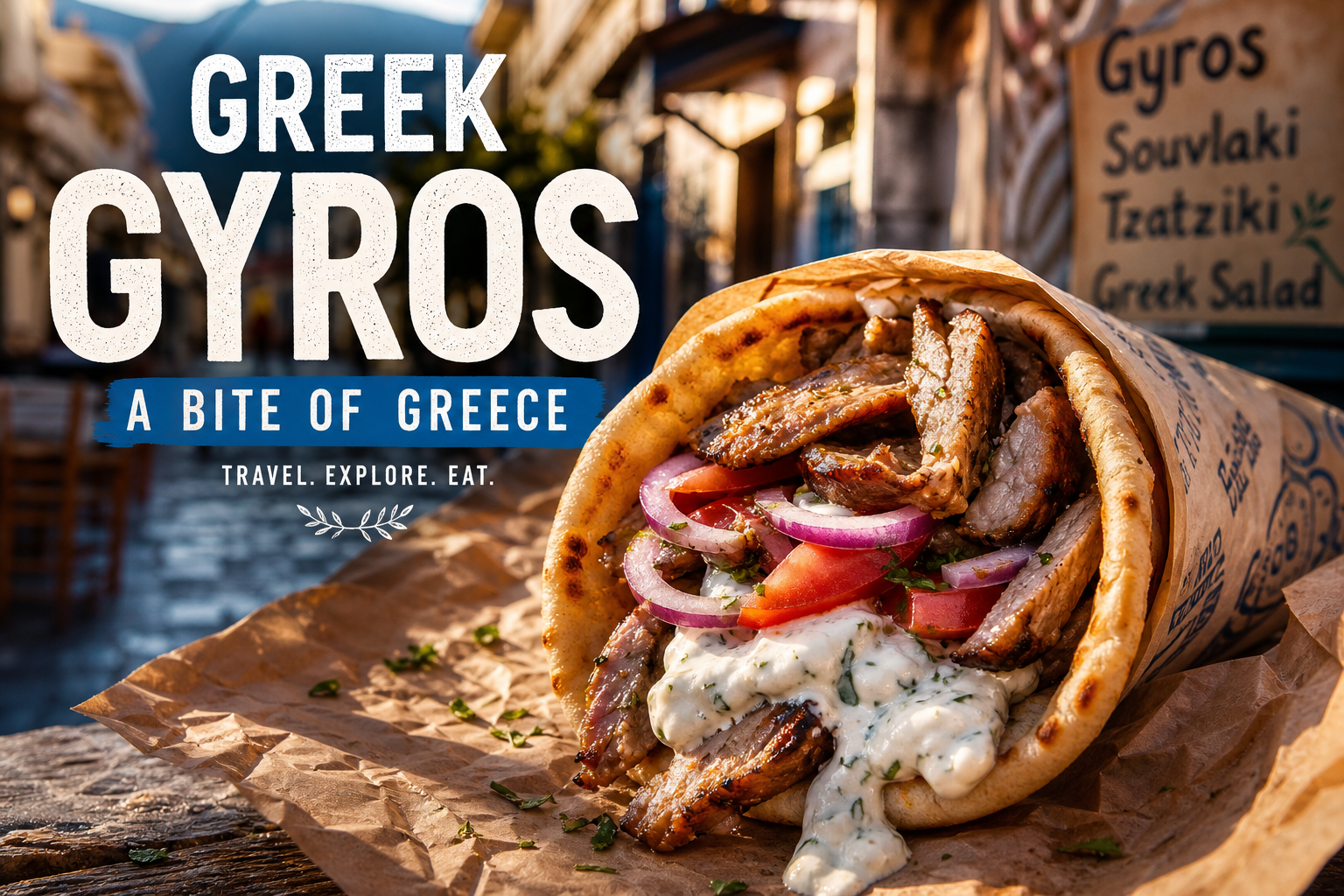
The defining Greek street food. Pork or chicken roasted on a vertical spit, sliced into a pita bread with tzatziki, tomato, onion and chips. A gyros pita costs €2.50–€4 and is a complete meal. Eat it standing at the counter - that's the correct way. Quality varies enormously; look for places where the spit is busy and turning constantly.
Souvlaki
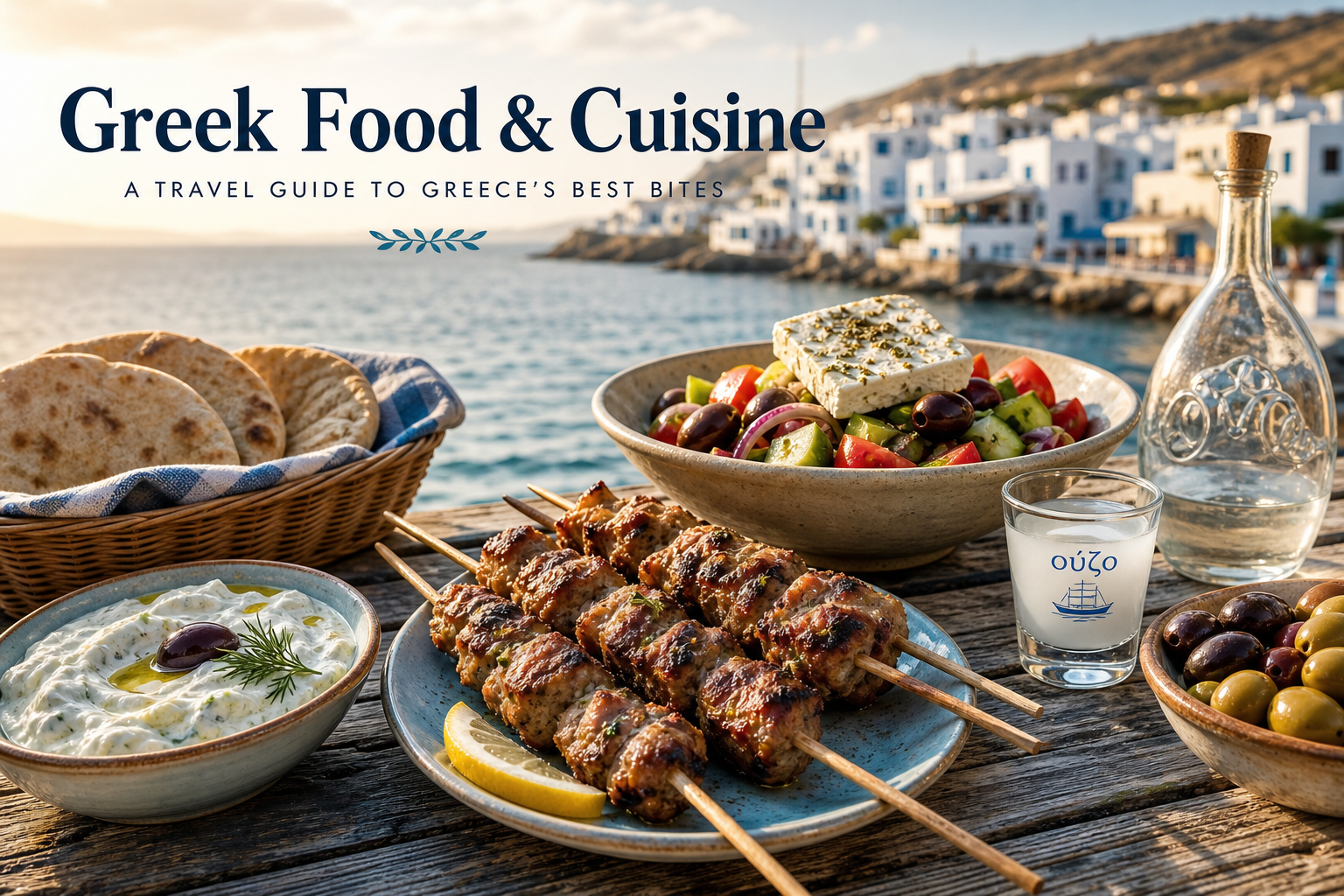
Chunks of marinated pork (or chicken, lamb or veal) grilled on a skewer. Can be eaten as a pita wrap (like gyros) or as a sit-down plate (souvlaki plate) with salad, chips and pita. The best souvlaki is in Thessaloniki, Athens and local tavernas - not in tourist-facing beach restaurants.
Greek Salad (Horiatiki)
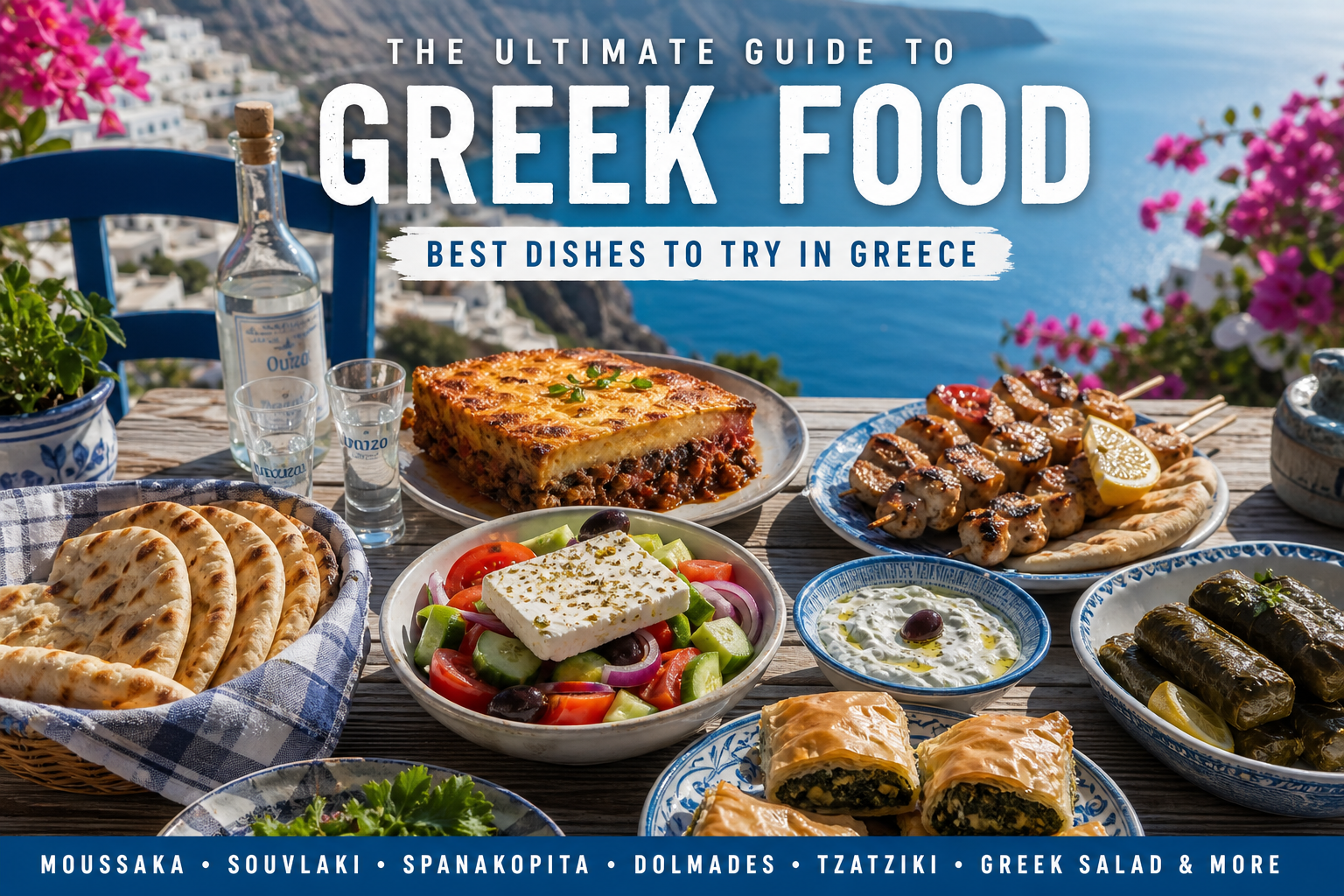
The correct Greek salad: tomatoes, cucumber, green pepper, red onion, Kalamata olives, a slab of feta on top, dressed with olive oil and dried oregano. No lettuce. No dressing other than olive oil. A properly made Greek salad is extraordinary. A watered-down tourist version is mediocre. The difference is the quality of the tomatoes, olive oil and feta.
Moussaka
Layers of minced meat (usually beef or lamb), aubergine and potato, topped with béchamel sauce and baked. A properly made moussaka is a substantial, deeply satisfying dish. It should be served hot and slightly caramelised on top. Avoid pre-made versions heated from a bain-marie - they're never as good.
Fresh Fish and Seafood
Grilled whole fish (sea bream, sea bass, red mullet), fried calamari, grilled octopus - all are excellent in Greece. Go to the harbour, look for a taverna where you can see the day's catch on ice, and ask what's fresh. Prices are typically per kilo for whole fish (€20–€45/kg depending on species); ask the weight before ordering.
Regional Specialities Worth Seeking Out
- Thessaloniki - bougatsa (custard or cheese pastry), koulouri (sesame bread ring), loukoumades (honey doughnuts)
- Crete - dakos (barley rusk with tomato and mizithra cheese), kalitsounia (small cheese pies), tsikoudia (local grape spirit)
- Corfu - pastitsada (pasta with beef in spiced sauce), sofrito (veal in white wine)
- Santorini - white aubergine, fava (yellow split pea purée), tomatokeftedes (tomato fritters), Assyrtiko wine
How to Find a Good Taverna
- Avoid restaurants on the main tourist waterfront - quality drops and prices rise proportionally to sea view
- Look for where locals eat - a taverna full of Greek families at lunchtime is a reliable indicator of quality
- Daily specials (mageirefta) - many tavernas cook one or two dishes fresh each day; these are almost always the best option
- Check if the menu has photos - good sign that it's a tourist trap; real tavernas rarely need them
- Go at Greek mealtimes - lunch 14:00–16:00, dinner 21:00–23:00. Arriving at 19:00 marks you as a tourist and may mean the food isn't fully fresh
What to Drink
- Coffee - Greek coffee (boiled, very strong), frappé (iced instant coffee - invented in Thessaloniki) or freddo espresso (iced espresso, now ubiquitous)
- Wine - Assyrtiko (Santorini), Xinomavro (Naoussa, northern Greece), Agiorgitiko (Nemea) are the top domestic varieties
- Ouzo - anise-flavoured spirit, always drunk slowly with mezedes (small dishes)
- Tsipouro / Tsikoudia - grape pomace spirit (similar to Italian grappa); strong and often served free with dessert