Greek Gastronomic Paradise - A Journey Through Tastes and Aromas
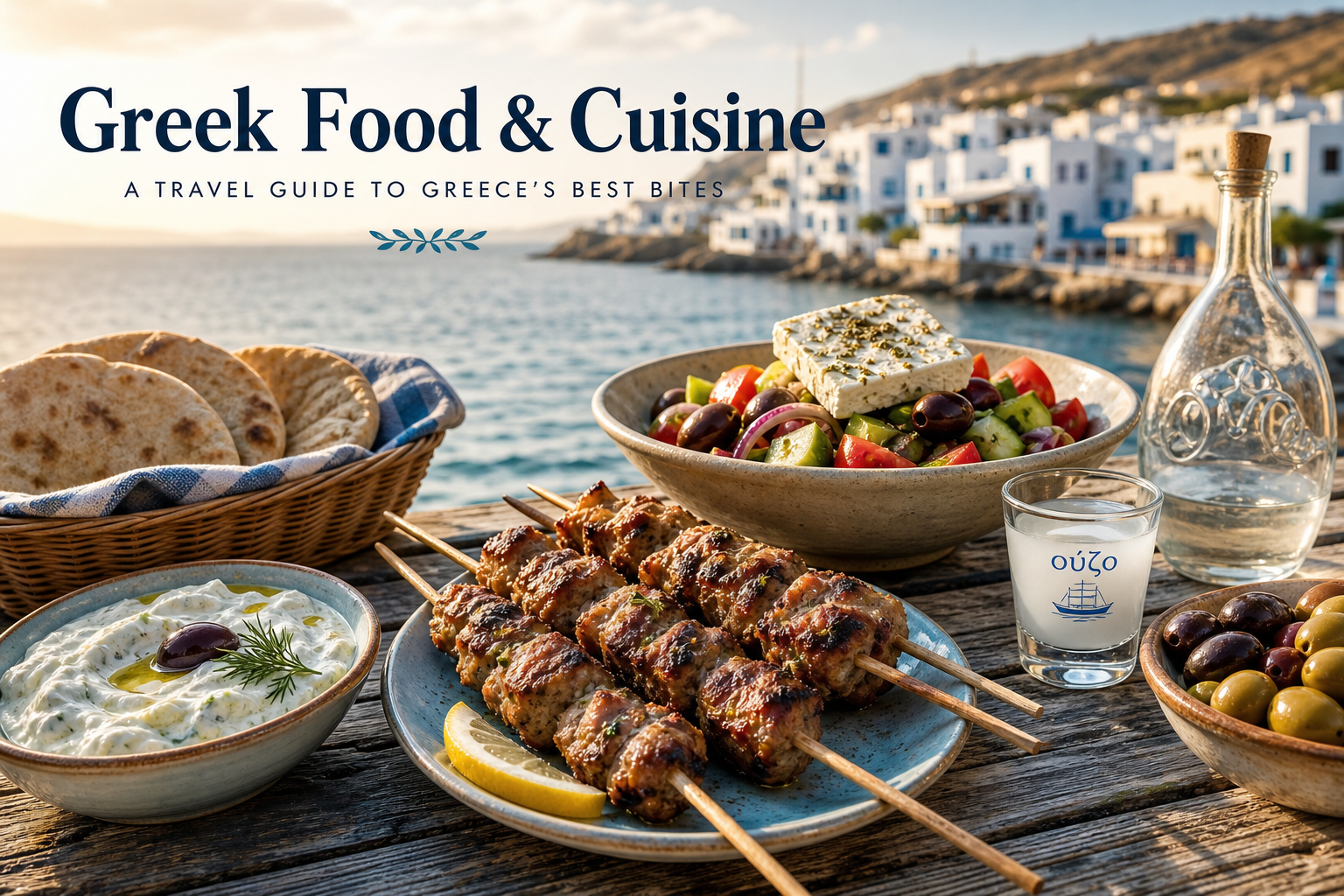
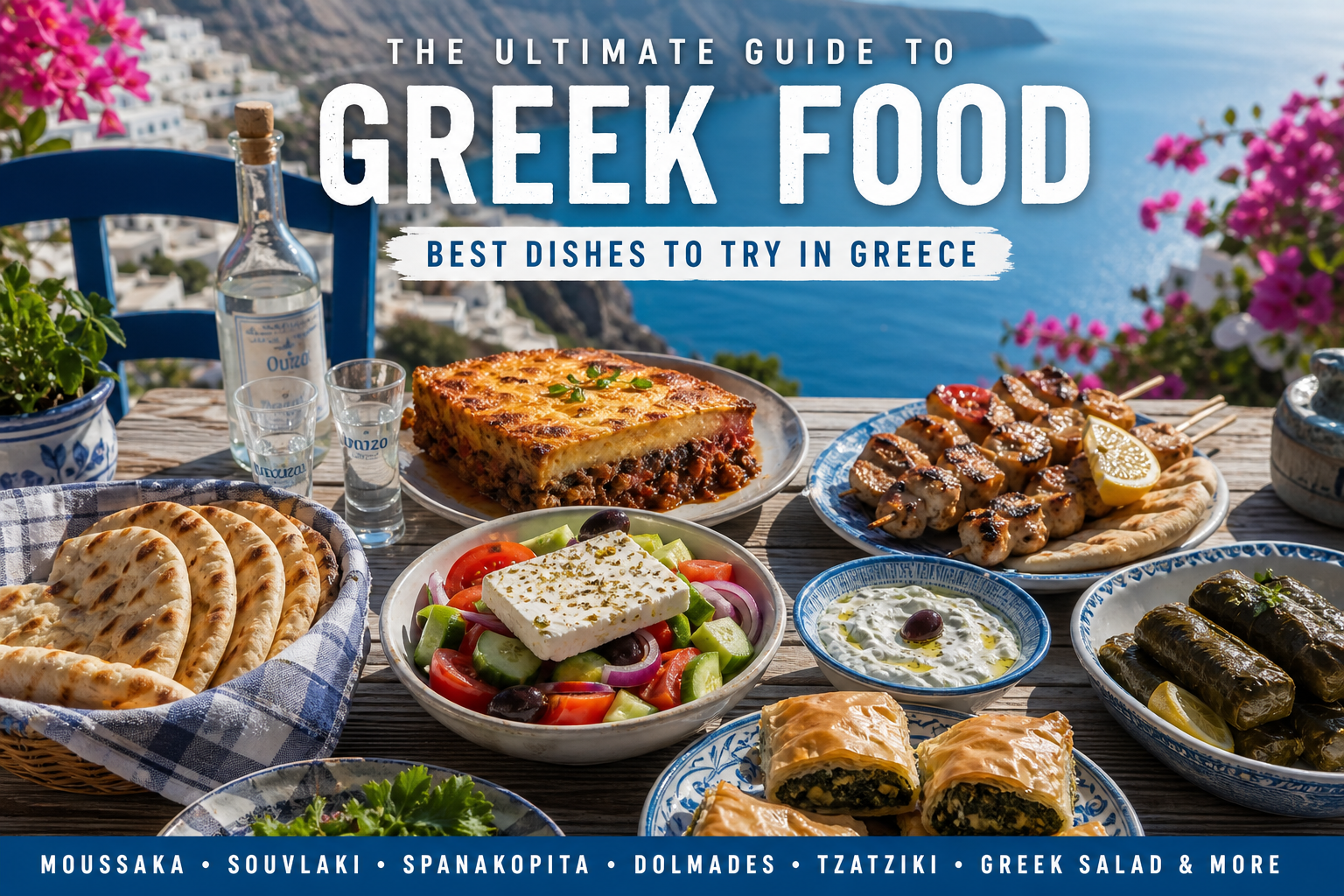
Greek cuisine is one of the great reasons to visit Greece - fresh ingredients, bold flavours and a dining culture that makes every meal an occasion.

Greek cuisine is one of the most celebrated in the world - not for its complexity, but for its extraordinary simplicity. The best Greek food needs no elaboration: a perfectly ripe tomato, exceptional olive oil, fresh fish from the morning's catch, feta aged in brine. These ingredients are treated with restraint and confidence, and the result is food that genuinely nourishes.
The Foundation - Olive Oil, Cheese and Bread
Greek cuisine begins with three ingredients. Olive oil - Greece produces some of the world's finest extra-virgin olive oil, particularly from Crete and the Peloponnese. Feta cheese - legally protected as a PDO product, made only in specific Greek regions from sheep's and goat's milk. Bread - Greek bread, particularly the sesame ring (koulouri) and various village breads, is outstanding. These three together form the basis of almost every Greek meal.
The Mediterranean Diet in Practice
Greece is the origin of the Mediterranean diet - not as a weight-loss programme, but as a complete way of eating. In practice this means: seasonal vegetables cooked in olive oil (horta - wild greens boiled and dressed), legumes (fasolada - bean soup, a genuine national dish), plenty of fresh fish, moderate amounts of meat, abundant salads and fruit as dessert. It is genuinely healthy, genuinely delicious and genuinely affordable.
Regional Differences
- Crete - the most distinctive regional cuisine in Greece. Dakos, kalitsounia, lamb with stamnagathi (wild chicory). The local spirit tsikoudia (rakia) is offered free with dessert in most restaurants.
- Thessaloniki and northern Greece - strong Turkish and Balkan influences. Bougatsa, pastries, sesame-crusted bread and outstanding street food scene.
- Santorini - volcanic soil produces uniquely flavoured produce. White aubergine, yellow split pea fava, cherry tomatoes and the Assyrtiko grape variety.
- The islands in general - each island has its own speciality, usually involving seafood, olive oil and local cheese.
Dining Culture
Greek dining is social and slow. A proper Greek meal (particularly in summer) begins at 21:00, involves multiple shared dishes (mezedes), proceeds at a leisurely pace and ends after midnight. Restaurants don't rush you out. Sharing everything on the table is standard. Tipping is appreciated but not obligatory.
Essential Greek Food Words
- Mageirefta - oven-cooked dishes (always the best option if available)
- Tis oras - cooked to order (grilled meats, fresh fish)
- Mezedes - small shared dishes, like tapas
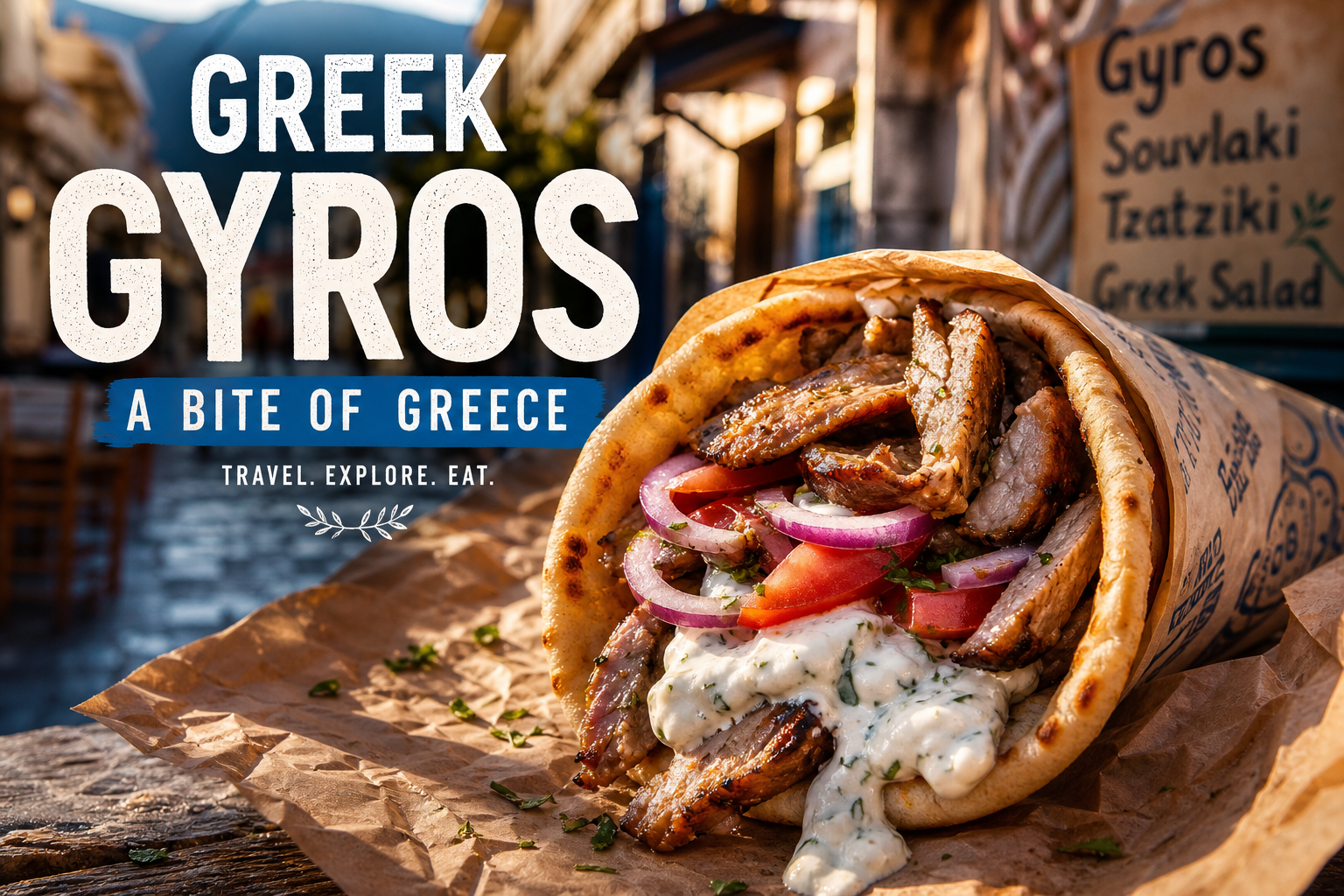
- Kalamaki - skewer (souvlaki on a stick, in Athenian usage)
- To logariasmo, parakalo - the bill, please