Forget Santorini: 6 Greek destinations that became the new stars of 2026
Condé Nast Traveler and Euronews named the 2026 favourites - Skopelos, Andros, Kalymnos, Astypalea, Alonissos and Ioannina. Fewer crowds, lower prices, more authentic experiences. Here is why it is worth a rethink.
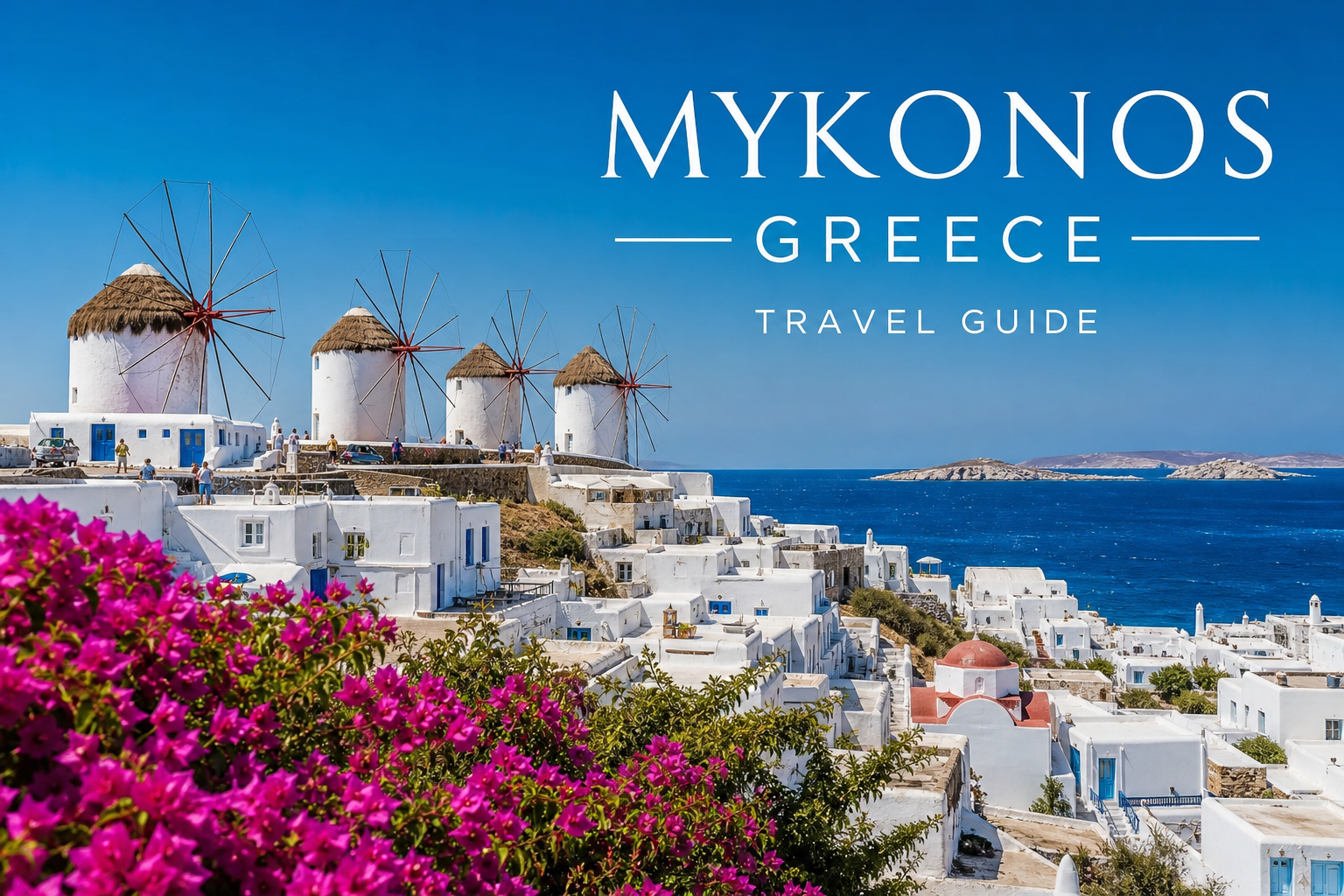
Santorini in 2026 has become something close to a Disneyland. So has Mykonos. Open Instagram in the morning and you see the same Oia sunset from five different angles, and the question creeps in - is it still worth it? Greece has roughly 6,000 islands and islets, around 200 of them inhabited. For the 2026 season, the two most influential travel magazines in the world have made it clear: there are better options.
Condé Nast Traveler in May 2026 named Kalymnos, Astypalea and Ioannina among the world's top under-the-radar destinations. Euronews the same month singled out Skopelos and Andros as "surprise destinations 2026", and Alonissos as the most relaxing island in the Aegean. The Greek government's February national strategy actively redirects investment to these places. Everything has aligned. Here's why.
Why the trend is shifting in 2026
Three things have happened over the past 12 months:
- The €20 cruise tax on Santorini and Mykonos has effectively cancelled the "quick hop" off a cruise ship - cruise lines now favour smaller islands, making them more accessible to everyone.
- The Special Spatial Framework caps new beds in saturated zones - Santorini and Mykonos can no longer grow, so prices keep rising.
- The climate crisis and extreme heat have made densely-built calderas even less comfortable in summer - Skopelos, Andros and Alonissos are green islands with pine forests and natural shade.
1. Skopelos - the "Mamma Mia" island, without the Mamma Mia crowd
Picture the famous clifftop church Sophie races toward in the film - that is Skopelos. In reality, this island is not a tourist trap. Euronews in 2026 named it one of Europe's most relaxing places - dense pine forest reaching all the way down to the waterline, crystal coves, Orthodox monasteries, taverna after taverna.
- Group: Northern Sporades (Aegean)
- How to get there: ferry from Volos (~2.5h) or Agios Konstantinos - both reachable by car via Thessaloniki
- From the Balkans: drive to Volos ~9–10h, then ferry
- Why now: no cruise tax, no investor-driven restaurants, Kastani and Limnonari are among the loveliest beaches in the Aegean
2. Andros - the Cyclades nobody expects
Andros is technically a Cycladic island - the same group as Santorini and Mykonos. Yet hardly anyone has heard of it. The reason: it isn't a blue-and-white photo set, but a green island with mountain trails, waterfalls and Venetian villages that survived 400 years.
Euronews recommends it for hikers and families who want to mix beach with culture. The island has a 300 km network of marked trails - ideal for a morning walk before the sun becomes punishing.
- Group: Northern Cyclades
- How to get there: ferry from Rafina port (near Athens, ~2h)
- From the Balkans: fly to Athens + ferry - about 5h door to door
- Why now: untouched hiking, perfect 2–3 days of quiet before Athens
3. Kalymnos - Condé Nast Traveler's 2026 pick
Condé Nast Traveler in May 2026 placed Kalymnos on its list of the world's top under-the-radar destinations. The reason is specific: Kalymnos is the global capital of sport climbing. More than 3,000 marked routes, elite climbers travel here from all over Europe.
But it isn't only for climbers. The island has a historical identity built around sponge-diving - a profession that defined it for centuries. The restaurants are authentic, the beaches of Massouri and Mirties are pristine, and accommodation is dramatically cheaper than Santorini: a good sea-view studio for two - €50–80/night.
- Group: Dodecanese (southeastern Aegean, near Turkey)
- How to get there: fly to Kos, then ferry to Kalymnos (45 min) - or direct ferry from Piraeus
- From the Balkans: fly to Kos (seasonal direct flights from Belgrade) + ferry
- Why now: Condé Nast just blew its cover - prices will climb in 2027
4. Astypalea - the butterfly of the Aegean
Astypalea on the map looks like a butterfly - two circles linked by a narrow isthmus. That is its hallmark: an island where you feel pleasantly nowhere. Hora, the main town, has white Cycladic architecture topped by a Venetian castle, looks like Santorini, but without the 8,000 people stalking the same sunset.
Even more relevant for 2026: Astypalea is Greece's first "smart eco" island. A partnership with Volkswagen - electric rental cars, solar charging stations, the ambition to become the first CO₂-neutral Aegean island by 2030. Condé Nast in 2026 calls it the model of Greek tourism's future.
5. Alonissos - the quietest Sporade
Alonissos sits next to Skopelos, but it's even quieter. The entire northern half is a national marine park - the largest marine reserve in Europe, a protected habitat of the Mediterranean monk seal (Monachus monachus). No resorts get built here, no cruise ships dock.
Euronews in 2026 placed Alonissos in the top 3 "slow summer" destinations of Europe. What does that mean in practice? In the morning you swim with fish in a protected sea zone, in the afternoon you sit in a taverna in Patitiri or Hora eating Greek fish, in the evening you watch a sky free of light pollution. Made for couples and anyone after real quiet.
- Group: Northern Sporades
- How to get there: ferry from Volos via Skopelos (~4h)
- From the Balkans: drive to Volos + ferry - can combine Skiathos + Skopelos + Alonissos over 10 days
- Why now: national marine park, crystal water, perfect for snorkelling and diving
6. Ioannina - the mainland alternative
Ioannina is not an island. It is the capital of the Epirus region in western Greece, about 4 hours' drive from Thessaloniki. Condé Nast Traveler in 2026 listed it among the world's hidden summer gems - unusual praise for a city without a beach.
The reason? Ioannina sits on the shore of Lake Pamvotis, has an intact medieval old town, Ottoman architecture, the finest Ottoman-influenced cuisine in Greece (Epirus was under Ottoman rule for 500 years), and - most importantly - the air is 10°C cooler than Athens in summer. An ideal 2–3-day stop as a contrast to the sea, particularly for travellers who cannot stand extreme heat.
💡 Pro tip: pair Ioannina with Parga or Syvota (90 min away) - you get a cultural city plus a beach in one trip. Ideal for older couples or families with teenagers tired of the beach.
Getting there - practical notes
The biggest obstacle to these destinations isn't price but logistics. A realistic overview:
| Destination | Best route | Time from Belgrade |
|---|---|---|
| Skopelos / Alonissos | Drive to Volos + ferry | ~12–14h |
| Andros | Fly to Athens + ferry from Rafina | ~5–6h |
| Kalymnos | Fly to Kos + ferry (45 min) | ~5–7h |
| Astypalea | Fly to Athens + domestic flight / ferry | ~7–9h |
| Ioannina | Drive via Thessaloniki and Meteora | ~11–12h |
⚠️ Keep in mind that the Greek ferry strike season overlaps with the holiday season (May–September). We unpack that in our guide to new 2026 taxes and regulations.
Three budgets - what does a 7-day trip cost?
Accommodation (studio): €420
Food and tavernas: €280
Climbing or bike rental: €120
Total: ~€820 (couple)
Family apartment: €700
Food and tavernas: €520
Boat trip + sunbeds: €180
Total: ~€1,400 (family)
Studio / villa by the sea: €650
Food, taverna, fresh fish: €350
Diving in the marine park: €140
Total: ~€1,140 (couple)
The verdict - is it worth abandoning Halkidiki?
If you love Halkidiki - stay on Halkidiki. That isn't the problem. The problem is if you keep going to Santorini or Mykonos every year and feel you're paying more for less. With the six alternatives above, you get the same sea, the same food and a better price - without watching a village lose its identity to tourism.
For summer 2026, our suggestion is simple: one classic holiday + one island adventure. A week in Halkidiki, then 4–5 days on Skopelos or Alonissos. You get the complete Greece - not just the postcard version.