Driving to Greece 2026 - 3 Best Routes, Toll Costs and Practical Tips
Driving to Greece is the most popular choice for travellers from Serbia and the region. Three main routes, real toll costs, driving times and safety tips.
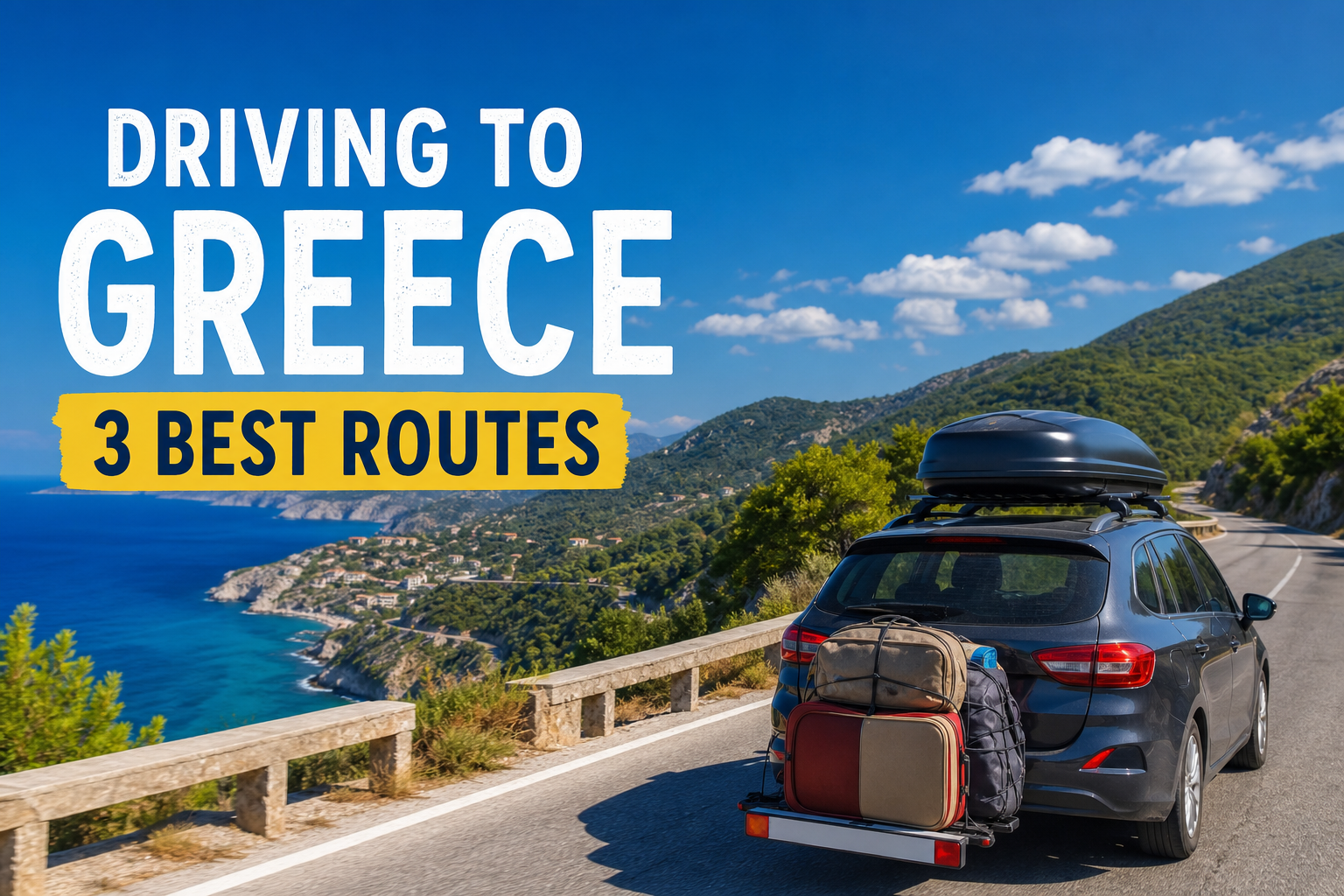
Driving to Greece is the most popular choice for travellers from Serbia, North Macedonia and Bulgaria. It offers flexibility, lower total costs and the ability to bring everything you need. This guide covers the three main routes, 2026 toll costs, realistic driving times and practical tips for a safe, efficient journey.
Route 1: Preševo - Evzonoi (The Main Route)
This is the fastest and most popular route. Drive the E75 motorway from Belgrade through Niš to the Preševo border crossing, then through North Macedonia to Evzonoi at the Greek border. Total distance Belgrade–Thessaloniki: approximately 600 km; driving time: 6–7 hours without significant delays.
2026 tolls (one way): Serbia (Belgrade–Preševo) approx. €19 / North Macedonia approx. €11 / Greece (Evzonoi–Thessaloniki) approx. €5.
Route 2: Via Bulgaria
The alternative route goes Niš → Dimitrovgrad → Sofia → Kulata, entering Greece at Promachonas. It's approximately 100 km longer but the scenery is varied and border queues are often shorter. A Bulgarian e-vignette is required (approx. €15 for 7 days, buy at bgtoll.bg). Ideal for travellers heading to eastern Halkidiki or Thassos.
Route 3: Via Albania (for Ionian Islands)
A third option goes via Novi Pazar–Prijepolje–Podgorica to the Albanian border, then through Tirana to the Greek crossing at Kakavia. The longest route (approx. 900 km) but brings you directly to western Greece, Ioannina and the Ionian Islands. Albanian road quality has improved significantly; the Kakavia crossing operates 24 hours.
Driving Tips
- Check your vehicle before departure: tyres, oil, battery, coolant, brake fluid
- Carry your green card (international motor insurance certificate) - mandatory for North Macedonia, Bulgaria and Albania
- Respect speed limits: fines in North Macedonia and Greece are high and strictly enforced
- Take a break every 2 hours; avoid driving through the night if tired
- Fill up in North Macedonia or Bulgaria - petrol is cheaper than in Greece
- Download an offline map (Google Maps / Maps.me) for areas with poor signal
Fuel Costs for the Journey
Belgrade to Thessaloniki is approximately 600 km. For a car consuming 7L/100km that's 42 litres. At an average fuel price of €1.65/litre (mix of Serbian, Macedonian and Greek prices), that's approximately €70 in fuel one way - or €140 round trip. Larger vehicles or those towing a trailer will naturally use more.
Border Crossing Tips
- Preševo (Serbia–North Macedonia) - largest border crossing on this route; longest queues in July–August, especially on Fridays and Saturdays. Cross before 6am or after 10pm to minimise waits.
- Evzonoi (North Macedonia–Greece) - usually faster than Preševo. Greek border officers check passports and vehicle documents.
- Promachonas (Bulgaria–Greece) - generally fast; the Bulgarian route avoids the worst North Macedonian queues.
What to Have Ready at the Border
- Passport for every passenger (Serbian ID card not accepted at Schengen borders)
- Vehicle registration certificate
- Green card insurance certificate (covering the transit countries)
- North Macedonia vignette (if using Route 1 - buy at the border or in advance)
- Bulgarian e-vignette (if using Route 2 - buy at bgtoll.bg)