Rhodes Holiday Guide 2027: Best Beaches, Old Town, Lindos, Prices and Direct Flights from Belgrade
In short
Rhodes is one of the sunniest Greek islands and a two-hour flight from Belgrade. The complete guide for the 2027 season: where to stay (Faliraki, Lindos, Ialysos or the quiet south), the 15 best beaches, the Knights' Old Town, day trips to Symi and Turkey, getting around and realistic prices for accommodation, food and tickets. Rhodes is the island you pick when you want guaranteed sunshine, warm sea from June to October and enough to do that you are not bored after ten days.
Rhodes is the island you pick when you want guaranteed sunshine, warm sea from June to October and enough to do that you are not bored after ten days. It is the fourth-largest Greek island, in the far south-east of the Aegean, closer to Turkey than to Athens - and one of the few reached from Serbia in summer by a direct flight of about two hours. It also has one of the best-preserved medieval towns in Europe, white Lindos beneath its acropolis and beaches for every taste: from sand and shallow water for children to windy Prasonisi, a paradise for surfers.
This guide is written for the 2027 season: which place to choose as a base, which beaches are worth the drive, what to see in the Old Town and Lindos, how to get there and what everything realistically costs.
Rhodes at a glance
| Question | Short answer |
|---|---|
| Getting there from Serbia | by air: Air Serbia flies seasonally non-stop Belgrade - Rhodes, about 2 h; otherwise via Athens |
| Swimming season | late May to mid-October; the sea is warmest in August and September |
| Best time | June and September: warm sea, fewer crowds, lower prices |
| Beaches | east coast calm and sandy, west coast windy and pebbly |
| Budget | mid-range; pricier than northern Greece, clearly cheaper than Santorini and Mykonos |
| Ideal for | families, couples, all-inclusive holidays, history lovers and surfers |
Why Rhodes in 2027: who it suits
- Families - the east coast has sandy beaches with a gentle slope, a water park in Faliraki and plenty of hotels with children's pools.
- Couples - Lindos, evening walks through the Old Town, west-coast sunsets and a day trip to Symi.
- All-inclusive fans - Rhodes is one of Greece's main all-inclusive islands, with large resorts in Kallithea, Faliraki, Kolymbia and down south around Kiotari.
- History lovers - the Knights Hospitaller, ancient acropolises, the Colossus as a legend and centuries of Ottoman and Italian heritage in one place.
- Surfers - Prasonisi on the southern cape is one of the best-known windsurf and kitesurf spots in Europe.
If you are still choosing an island, compare Rhodes with the Cyclades in our Cyclades guide and in Which Greek islands to visit.
Where to stay on Rhodes: the resorts compared
Choosing your base is the key decision, because the island is about 80 km long and the drive from town to the southern cape takes a good hour and a half. The rule is simple: the east coast for calm sea, the west for wind and the airport, the town for things to do.
| Place | Beach | Atmosphere | Best for |
|---|---|---|---|
| Rhodes Town | Elli town beach, sand and fine shingle | Old Town, restaurants, shopping, nightlife | couples, short stays, sightseeing |
| Ialysos and Ixia | pebbles, often windy | hotel strip close to town and the airport | surfers, island explorers |
| Kallithea and Faliraki | sand, calm sea | the biggest resort, water park, nightlife | families, young travellers, all inclusive |
| Afandou and Kolymbia | long beaches, sand and pebbles | quieter, resorts, golf course | families, crowd-free holidays |
| Stegna and Haraki | sand, sheltered bays | small villages with waterfront tavernas | couples, families with a car |
| Lindos | sand, shallow water, St Paul's Bay | the prettiest place on the island, pricier | couples, romantic breaks |
| Pefkos and Lardos | small sandy coves | relaxed, close to Lindos | couples, families |
| Kiotari, Gennadi and the south | miles of shingle beach | peace, large resorts, few villages | all inclusive, total rest |
Rhodes Town - sea plus plenty to do
If you want somewhere to stroll in the evening, town is the best base: the Old Town is minutes away, excursion boats leave from Mandraki harbour and buses run along both coasts. Elli beach on the northern tip is organised and lively, while on the west side of town the sea is often choppy. More on the Rhodes Town page.
Faliraki and Kallithea - the island's biggest resort
Faliraki, about 15 km south of town, has a long sandy beach, every water sport, a water park and more bars than anywhere else on Rhodes. The loud nightlife is concentrated in one street, so families sleep peacefully in hotels at either end of the resort. Anthony Quinn Bay, Ladiko and Kallithea Springs are close by. See Faliraki.
Lindos - the Rhodes postcard
The white village below the acropolis is the most beautiful place on the island and the priciest base. Staying overnight has one big advantage: early in the morning and in the evening you have it to yourself, once the tour coaches leave. Details below and on the Lindos page.
Ialysos and the west coast - wind, surf and sunsets
The west coast faces the north-westerly meltemi, so the sea is more often choppy and the beaches pebbly. That makes Ialysos and Ixia a favourite with surfers, while being close to the airport and town makes it a practical base if you hire a car and explore. Sunsets here beat anything on the east coast.
East or west coast: wind and sea
In summer the Aegean gets the meltemi, a dry northerly to north-westerly wind that blows hardest in July and August, usually in the afternoon. On Rhodes this means:
- The east coast (Kallithea, Faliraki, Afandou, Tsambika, Stegna, Lindos, Pefkos) is sheltered: the sea is calmer and warmer, ideal for children and swimming.
- The west coast (Ialysos, Ixia, Kremasti, Kamiros) catches the wind and waves: great for surfing, less so for babies and weak swimmers.
- Prasonisi on the southern cape shows both faces at once: calm water on one side of the sand spit, waves on the other.
With small children, choose a base in the east. If you value a night breeze and do not mind pebbles, the west is more pleasant in August.
The 15 best beaches on Rhodes
- Anthony Quinn Bay - a small rocky turquoise cove named after the actor who filmed "The Guns of Navarone" on Rhodes. The best spot for snorkelling; arrive before 10 am, it is small.
- Ladiko - the neighbouring cove, sand and pebbles, calmer and more family-friendly than Anthony Quinn.
- Kallithea Springs - restored Italian-era spa with a swimming area in the rocks; paid entry, around 5 €.
- Faliraki - a long sandy beach with every facility, water sports and lifeguards.
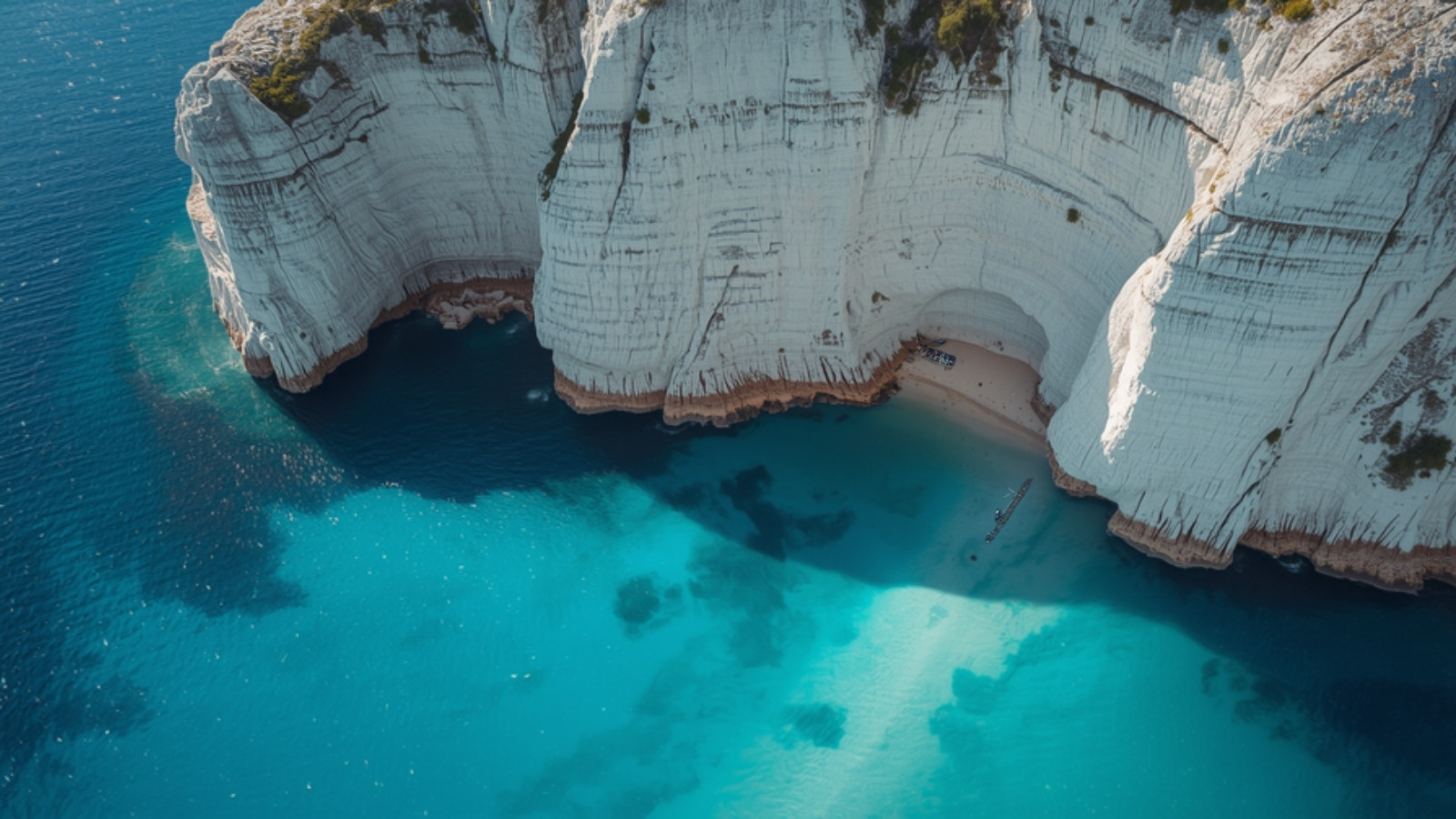
- Traganou - a white beach with caves in the cliff, north of Afandou; very photogenic.
- Tsambika - golden sand and shallow water, with Panagia Tsambika monastery on the hill above (about 300 steps and a view over half the island).
- Stegna - a wide sandy bay with tavernas right on the water and fishing boats.
- Agathi (Golden Beach) - sand and shallows below the ruins of Feraklos castle near Haraki; one of the best for children.
- Lindos main beach - a sheltered bay with shallow water below the acropolis.
- St Paul's Bay - an almost enclosed lagoon behind Lindos where, according to tradition, the Apostle Paul landed; one of the island's great views.
- Pefkos - a string of small sandy coves south of Lindos, quieter and cheaper.
- Glystra - a small horseshoe-shaped sandy cove near Lardos, shallow and sheltered.
- Kiotari and Gennadi - miles of shingle and sand, uncrowded, with room for everyone.
- Prasonisi - the sand spit linking an islet to Rhodes; windsurf and kitesurf schools and endless sand.
- Fourni - a wild cove on the west coast below Monolithos castle, for peace and sunsets.
Best for children: Agathi, Glystra, Stegna, Lindos main beach and Faliraki. For snorkelling: Anthony Quinn, Ladiko and Kallithea. What a beach day costs (sunbeds, umbrella, drinks) is in Greece beach prices.
Rhodes Old Town: what to see
The Old Town has been a UNESCO World Heritage Site since 1988 and is not a museum but a living quarter inside four kilometres of walls built by the Knights Hospitaller. People live, work and dine here, and after dark it becomes one of the most atmospheric places in the Mediterranean.
- Street of the Knights - a cobbled street lined with the "inns" of knights from different European nations; loveliest early in the morning.
- Palace of the Grand Master - the fortress-palace at the top of the Street of the Knights, rebuilt in the Italian period, with ancient mosaics in its halls.
- Archaeological Museum - housed in the former Knights' hospital, with sculptures and finds from across the island.
- Clock Tower - the climb gives the best view over the roofs, minarets and harbour.
- Sokratous Street and Hippocrates Square - shopping, cafés and bustle.
- The Jewish Quarter and Martyrs' Square - the quieter part of town with the Kahal Shalom synagogue.
Outside the walls, Mandraki harbour is where legend places the Colossus of Rhodes, one of the Seven Wonders of the Ancient World, toppled by an earthquake around 226 BC. Today two bronze deer on columns guard the harbour entrance, with three windmills and St Nicholas fortress behind them. On Monte Smith hill above town stands the ancient Acropolis of Rhodes with the Temple of Apollo, a stadium and a small theatre, plus a fine sunset view.
💡 Since the 2025 price reform, tickets for the most visited sites on Rhodes (Palace of the Grand Master, Acropolis of Lindos) cost around 20 €, smaller sites less. Buy online in advance on the official hhticket.gr site and check reductions for children, as conditions vary by age and nationality.
Lindos: acropolis, white village and St Paul's Bay
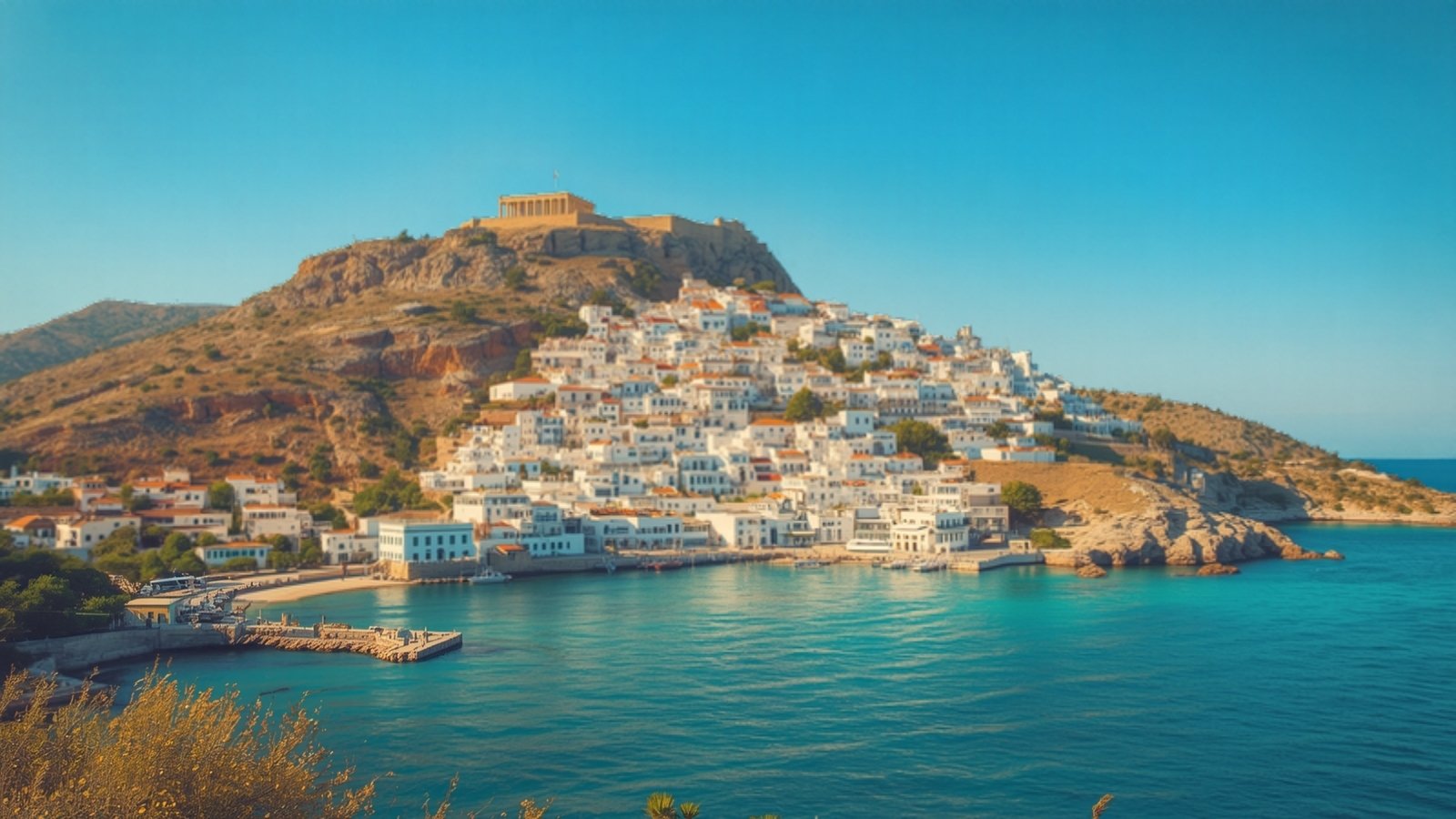
Lindos lies about 50 km south of town on the east coast. White houses climb a cliff crowned by the Acropolis of Lindos, with the 4th-century BC Temple of Athena Lindia and the remains of a Knights' fortress. The view down over St Paul's Bay and the open sea is the reason most people come to Rhodes.
- Go early (by 8.30 am) or after 5 pm: the rock gets scorching in summer and the tour coaches arrive around midday.
- Walk, don't ride a donkey - the climb takes 15-20 minutes through shaded lanes; animal welfare groups have warned for years about overworked donkeys.
- Parking is above the village and fills up fast in summer; the bus from town takes about an hour and a half.
- In the evening Lindos turns quiet: dinner on a roof terrace facing the floodlit acropolis is a memory in itself.
Island trips: from Butterfly Valley to castles above the sea
- Butterfly Valley (Petaloudes) - a wooded gorge with a stream where thousands of moths gather in summer, mostly July and August. Entry is a few euros; walk quietly and do not disturb them.
- Seven Springs (Epta Piges) - shade, streams and a tunnel you walk through in water; a perfect break on a hot day, near Kolymbia.
- Filerimos - a hill above Ialysos with a monastery, a path to a giant cross at the top, peacocks and views over the west coast.
- Ancient Kamiros - remains of a Hellenistic town on a slope above the sea on the west coast.
- Kritinia and Monolithos castles - Knights' fortresses on rocks above the sea; Monolithos has one of the island's finest sunsets.
- Embonas - a mountain village at the foot of Attavyros, the island's highest peak, known for its wineries.
- Prasonisi - a full day at the southern cape; even if you do not surf, watching the sails on the waves is a show.
A car is practically essential for these; prices, documents and insurance are in Renting a car in Greece, and typical prices of organised trips in Greece excursion prices.
Boat trips: Symi, Lindos and Turkey
- Symi - the most popular boat trip: Gialos harbour with its colourful neoclassical houses and Panormitis monastery. About an hour each way by fast boat, with one-way tickets usually 15-35 € depending on the vessel.
- By boat to Lindos - daily summer boats from Mandraki run down the east coast with swimming stops in coves.
- Marmaris, Turkey - about an hour by fast boat. Serbian citizens do not need a visa for Turkey but do need a passport, and on the way back you cross the Schengen external border with biometric checks.
How to get to Rhodes from Serbia
| Option | Details | Journey time |
|---|---|---|
| Direct flight from Belgrade | Air Serbia flies seasonally to Diagoras airport (RHO); in 2026 the route usually had about four flights a week. The 2027 schedule is published over the winter. | about 2 h |
| Package holiday | flight and hotel in one package, often all inclusive | about 2 h |
| Via Athens | flight to Athens, then a domestic flight to Rhodes; useful off-season or when direct dates are full | 4-6 h with the connection |
| Ferry from Piraeus | overnight ferry calling at other islands; deck seat roughly 70-100 € per person, cabins much more | 15-18 h |
From Serbia, Rhodes is practically always reached by air: by car and ferry the trip takes two days. A return ticket in high season usually costs a few hundred euros per person depending on dates and baggage, so booking the flight early pays off. All airports and direct routes are in Greek airports, and ferry-plus-flight combinations in How to reach the Greek islands.
Getting around the island
- Airport to town: the airport is in Paradisi, about 15 km from town. A taxi is roughly 25-35 €, and the city bus runs regularly during the day.
- Buses: KTEL covers the east coast (Faliraki, Lindos, the south), RODA the town and west coast. The ride to Lindos takes about an hour and a half and costs a few euros.
- Car hire: in high season roughly 35-60 € a day for a small car; book ahead for July and August.
- Scooters and quads: popular in Faliraki and Pefkos, but roads are narrow and summer brings wind and heat; always wear a helmet and take full insurance.
Rhodes prices 2027
Rhodes is pricier than northern Greece, but supply is huge, so good value can be found even in August. Typical nightly prices in high season, with a projected moderate increase for 2027:
| Item | July and August | June and September |
|---|---|---|
| Studio for two | 45-90 € | 35-65 € |
| Apartment for four | 70-140 € | 55-100 € |
| 3* hotel with breakfast (2 people) | 80-150 € | 60-110 € |
| 4* all-inclusive hotel (2 people) | 180-350 € | 130-250 € |
| Taverna meal per person | 15-25 € | 15-25 € |
| Gyros pita / freddo espresso | 4-5 € / 3-4.5 € | 4-5 € / 3-4.5 € |
| Two sunbeds and an umbrella | 15-30 €, more in Lindos | 10-25 € |
At reception you also pay the climate resilience fee, per unit and per night, depending on the property category (amounts in Greece taxes and regulations). Itemised food prices are in Greece food prices, and every change awaiting travellers in 2027 in Greece holiday 2027.
When to visit Rhodes in 2027
| Month | Air (daily max) | Sea | Crowds and prices |
|---|---|---|---|
| May | about 25 °C | about 20 °C | quiet, low prices; sea for the brave |
| June | about 29 °C | 22-23 °C | excellent: warm, before the peak |
| July | about 31 °C | 24-25 °C | busy, afternoon meltemi |
| August | about 32 °C | 25-26 °C | peak season, most expensive |
| September | about 29 °C | about 25 °C | the best month: warmest sea, fewer people |
| October | about 25 °C | about 23 °C | still swimmable; end of season |
Two dates for the 2027 calendar: Orthodox Easter falls on 2 May, so in Serbia 30 April to 4 May are public holidays - a nice window for sightseeing, though the sea is still cold for swimming. Summer school holidays for Serbian primary pupils start on 14 June 2027, and the second half of June is one of the best times for Rhodes with children. Month by month for all of Greece: Best time to visit Greece.
Rhodes with children
- Choose the east coast: Faliraki, Kolymbia, Stegna, Haraki (Agathi beach), Lindos, Pefkos and Lardos (Glystra).
- The Faliraki water park is among the largest in Greece and is often discounted in all-inclusive packages.
- The shade and streams of Seven Springs and Butterfly Valley make a good break during the hottest hours.
- The sun is strong even in June: hat, UV shirt and sunscreen, plus the tips in Sun protection in Greece.
Practical tips
- Documents: Serbian citizens need a biometric passport for Greece; the ID card is not valid. Details in Passport or ID card for Greece.
- Cash: small tavernas, taxis and the reception fee are often paid in cash.
- Wildfires: the south of the island had a major fire and evacuations in July 2023. In summer respect bans on lighting fires and entering forests; Greece's emergency alert system (112) sends SMS warnings to foreign numbers too.
- Wind: if the west is rough, head east; the difference on the same day is often dramatic.
- Climbing Lindos and Tsambika: water, a hat and shoes that grip polished stone.
Frequently asked questions about Rhodes
How long is the flight from Belgrade to Rhodes?
The direct flight takes about two hours. Air Serbia operates the route seasonally, in 2026 usually about four times a week; the exact summer 2027 schedule is published over the winter, and off-season you fly via Athens.
What is the best beach on Rhodes?
The usual picks are Anthony Quinn Bay (snorkelling), Tsambika and Agathi (sand and shallow water), St Paul's Bay in Lindos (the view) and Prasonisi (surfing). For families the sandy east-coast beaches are best.
Where is the best place to stay on Rhodes for a first visit?
Faliraki or Kallithea for beach, facilities and proximity to town; Lindos or Pefkos for a more romantic stay; Rhodes Town if sightseeing and nightlife matter most. Families with small children should choose the east coast.
How much does a week on Rhodes cost for two?
In June or September, with flights, a studio or 3* hotel and meals in tavernas, budget roughly 1,200-2,000 € for two for seven nights. In August and in 4* all-inclusive hotels the total is noticeably higher.
Is Rhodes good for children?
Yes, especially the east coast: sandy beaches with a gentle slope, the Faliraki water park, plenty of hotels with children's pools and a short non-stop flight from Belgrade.
Do I need a car on Rhodes?
Not for a holiday in one resort; buses link town, Faliraki and Lindos. For the southern beaches, the western castles and Butterfly Valley, a car saves a lot of time.
When is the sea warmest on Rhodes?
In August and September, around 25-26 °C. September has the warmest sea of the year with fewer crowds and lower prices than August.
Can you go from Rhodes to Turkey?
Yes, by boat to Marmaris in about an hour. Serbian citizens need no visa for Turkey, but a passport is required.
Next step
If Rhodes is your pick for 2027, book flights and accommodation early: direct flights from Belgrade and the best hotels for July and August fill up in winter, and how to use early-booking discounts without risk is explained in Early booking Greece 2027. Still choosing? Read Where to go in Greece in 2027 or browse accommodation direct from owners. Own an apartment or hotel on Rhodes? See how to reach guests from Serbia on the for owners page.